

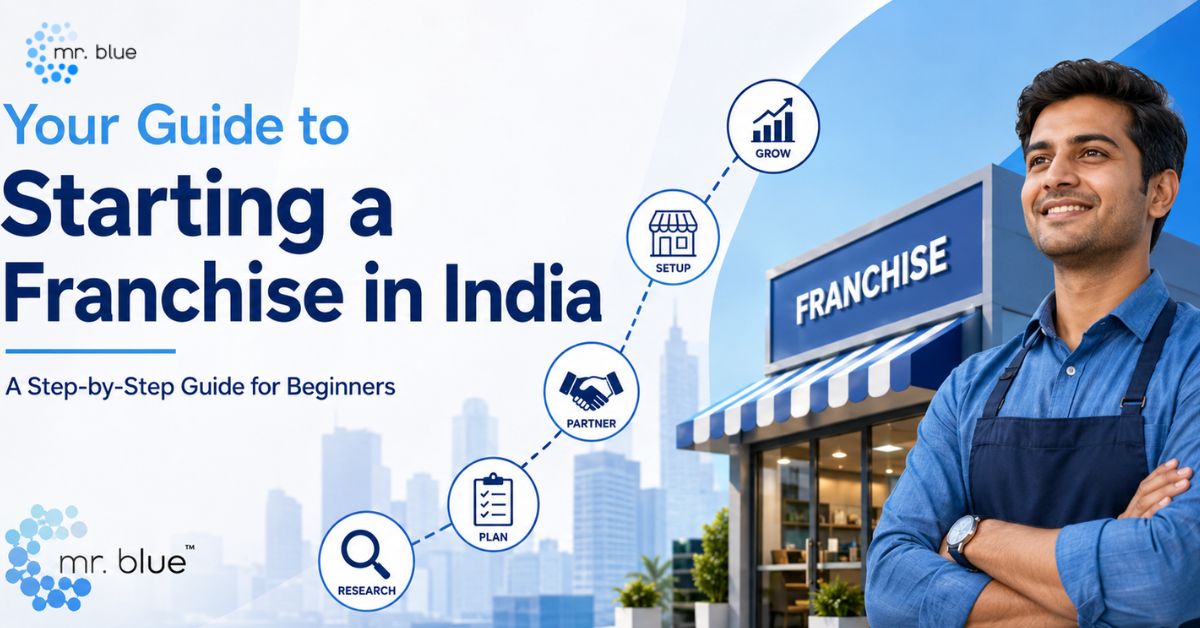
Entrepreneurship through franchising has emerged as one of the most accessible pathways to business ownership in India. Unlike starting a venture from scratch, franchising offers the advantage of proven business models, established brand recognition, comprehensive training, and ongoing support systems. However, navigating the franchise landscape requires careful planning, thorough research, and informed decision-making.
This comprehensive guide walks you through the complete process of acquiring and operating a franchise in India, designed specifically for beginners without prior franchise experience. Whether you’re drawn to food and beverage, retail, services, or specialized sectors, understanding the systematic approach to franchise selection and establishment significantly improves your chances of success.
Understanding Franchise Business Models in India
Before taking the franchise route, it’s essential to understand what franchising actually entails. A franchise is a business arrangement where a franchisor (the company that owns the brand and business model) grants a franchisee (you, the entrepreneur) the right to operate a business using their brand name, systems, and processes in exchange for fees and ongoing royalties.
The Indian franchise sector has grown exponentially, with diverse opportunities spanning quick-service restaurants, retail outlets, educational institutions, healthcare services, beauty and wellness, fitness centers, laundry services, and numerous specialized sectors. The organized franchise industry in India is estimated at over ₹50,000 crores, with consistent annual growth rates of 25-30%.
The franchise model works through a legal agreement specifying your rights and obligations, the franchisor’s support commitments, fee structures, territorial rights, operational standards, and contract duration. Understanding these fundamentals helps you evaluate franchise opportunities realistically rather than being swayed by marketing claims.
Step 1: Self-Assessment and Goal Setting
Evaluate Your Personal Readiness
The first step in franchising is honest self-assessment. Franchise ownership demands different skills than corporate employment or independent business ownership. You need capital, commitment to following established systems, willingness to learn from training, people management abilities, and resilience during the establishment phase.
Consider whether you’re drawn to entrepreneurship for the right reasons. Franchising isn’t a shortcut to quick wealth—it’s a structured business approach requiring consistent effort, attention to detail, and adaptability.
Define Your Business Objectives
Clarify what you hope to achieve through franchising:
- Are you seeking primary income or supplementary revenue?
- Do you want to build a multi-unit franchise empire or operate a single location?
- What’s your ideal timeline to profitability?
- Are you interested in being hands-on operational or maintaining distance while managing others?
- What capital can you realistically invest without jeopardizing personal finances?
Financial Capacity Assessment
Franchise ownership requires financial resources beyond the advertised franchise fee. Calculate your total capital availability including:
- Initial franchise fee (₹5-50 lakhs depending on brand and sector)
- Setup costs including renovation, equipment, signage, furniture (₹10-100 lakhs)
- Working capital for initial 6-12 months of operations (₹5-50 lakhs)
- Personal contingency reserves (₹5-10 lakhs minimum)
- Initial inventory and supplies (₹2-20 lakhs)
Most successful franchisees maintain financial reserves equal to 12-18 months of projected expenses, ensuring they can sustain operations during the critical establishment phase without desperate decisions that compromise service quality.
Step 2: Extensive Research and Evaluation
Identify Franchise Opportunities
Several resources help identify franchise opportunities suited to your interests and investment capacity:
Franchise portals like Indian Franchise Association (IFA) website, franchise-specific job boards, industry publications, and direct franchisor websites maintain updated listings. Additionally, franchise exhibitions held in major cities provide opportunities to interact with multiple franchisors simultaneously.
Evaluate Franchisor Credibility
Not all franchise offers are legitimate or well-designed. Credibility evaluation includes:
- Years of operation: Established franchisors (operating 10+ years) with multiple successful locations demonstrate proven viability
- Financial transparency: Request Franchise Disclosure Documents detailing fees, obligations, and support commitments
- Franchisee satisfaction: Connect with existing franchisees to understand actual experiences
- Legal standing: Verify registration with Indian Franchise Association and check for litigation history
- Support infrastructure: Evaluate training programs, operational support, technology systems, and problem-resolution mechanisms
Conduct Market Research
Even with an established franchise, success depends on local market conditions. Research your target market including:
- Demographic analysis: Population size, age distribution, income levels, purchasing habits
- Competition assessment: Identify direct competitors and market saturation levels
- Location availability: Assess suitable business locations and rental costs
- Consumer preferences: Understand local tastes, preferences, and brand loyalties
- Economic indicators: Growth trends, employment rates, business sentiment
This research helps determine if the franchise concept aligns with local market needs and whether you can achieve projected financial performance in your chosen location.
Step 3: Detailed Financial Planning and Feasibility Analysis
Project Financial Requirements
Create detailed financial projections for your specific location:
Initial Setup Costs Breakdown:
- Franchise fee: As quoted by franchisor
- Site renovation and construction: Location-dependent (typically ₹10-100 lakhs)
- Equipment and machinery: Category-specific (₹5-50 lakhs)
- Furniture and fixtures: Standard requirements (₹2-10 lakhs)
- Initial inventory: Opening stock requirements (₹2-20 lakhs)
- Licenses and permits: Legal and regulatory compliance (₹1-5 lakhs)
- Signage and branding: Visual identity establishment (₹2-10 lakhs)
- Pre-opening marketing: Awareness generation (₹2-5 lakhs)
- Miscellaneous contingency: Unexpected expenses (₹3-10 lakhs)
Monthly Operating Costs:
- Rent and utilities: Location-dependent
- Staff salaries: Based on required workforce
- Inventory replenishment: Ongoing supplies
- Royalties and fees: Franchisor obligations (typically 4-8% of revenue)
- Marketing and promotions: Brand building investments
- Insurance and compliance: Regulatory requirements
- Maintenance and repairs: Equipment upkeep
Revenue Projections:
Based on market research, franchise category, and location characteristics, project realistic monthly revenue. Consider ramp-up periods—most franchises don’t reach full capacity immediately. Conservative projections assume 60-70% capacity in month 1-3, 75-85% in months 4-6, and 90%+ from month 7 onward.
Calculate break-even point (when cumulative profits equal initial investment) and return on investment timeline. Most franchises break even within 18-36 months.
Financing Options:
Identify capital sources:
- Personal savings: Demonstrates commitment to lenders
- Bank loans: Many banks offer franchise-specific loans at favorable rates
- Family financing: Personal loans from family members
- Investor partnerships: Sharing ownership with financial partners
- Combination approach: Mixing multiple sources
Step 4: Legal Review and Documentation
Understand the Franchise Agreement
The franchise agreement is a binding legal document specifying all terms of the relationship. Critical sections to review with legal counsel include:
Initial and Ongoing Fees:
- Franchise fee: One-time payment for rights
- Royalty percentage: Recurring payment as percentage of revenue
- Marketing fund contributions: Required promotional spending
- Technology and system fees: Ongoing technology system costs
- Training fees: If charged separately from franchise fee
Operational Obligations:
- Quality standards: Mandatory service and product standards
- Operating hours: Minimum and maximum hours of operation
- Location approval: Franchisor’s veto rights over site selection
- Inventory sourcing: Required suppliers and procurement requirements
- Staffing standards: Employee qualification and training requirements
Franchisor Support Commitments:
- Training duration and frequency
- Ongoing operational support availability
- Marketing and promotional assistance
- Technology system access and updates
- Problem-resolution procedures
Exit and Renewal Terms:
- Contract duration (typically 3-10 years)
- Renewal conditions and options
- Termination clauses and break points
- Non-compete restrictions post-termination
- Transfer and resale restrictions
Step 5: Location Selection and Site Assessment
Identify Potential Locations
Work with the franchisor’s location selection team, as they possess market expertise and demographic data. Most franchisors provide location criteria guidance including:
- Minimum and maximum population density requirements
- Target demographic characteristics
- Accessibility and visibility parameters
- Parking and traffic flow considerations
- Proximity to competitors and complementary businesses
- Lease term and rental cost ranges
Evaluate Specific Sites
Once potential locations are identified, conduct detailed evaluation:
Foot Traffic Analysis:
- Count pedestrian and vehicle traffic during peak and off-peak hours
- Observe customer flow patterns and buying behaviors
- Identify traffic sources (office workers, students, residential communities, tourists)
- Assess traffic consistency across different days and seasons
Visibility and Accessibility:
- Visibility from main roads and visibility from within shopping complexes
- Ease of entry and exit for customers
- Parking availability and proximity
- Public transportation accessibility
- Disabled access compliance
Demographic Alignment:
- Confirm target demographic presence in the area
- Assess purchasing power levels
- Analyze lifestyle and consumption patterns
- Evaluate educational and employment profiles
Competitive Landscape:
- Identify direct competitors within 500m-1km radius
- Assess competitive positioning and market share
- Evaluate competitive pricing and service quality
- Identify market gaps the franchise can address
Step 6: Training and Skill Development
Participate in Franchisor Training Programs
Comprehensive training is essential for franchise success. Quality franchisor programs include:
Pre-Opening Training:
- Operations procedures and protocols
- Equipment operation and maintenance
- Quality control standards
- Customer service protocols
- Financial management and record-keeping
- Staff recruitment and training
- Technology systems operation
Duration and Format:
- Onsite training at franchisor headquarters (typically 2-4 weeks)
- Training at your location during setup
- Online modules and documentation
- Continuous refresher training and updates
Franchisee Support Networks:
Established franchisors facilitate connections among franchisees:
- Regular meetings and knowledge-sharing sessions
- Peer mentoring and problem-solving communities
- Best practice discussions and idea exchange
- Collective negotiation with suppliers
- Unified marketing and promotional campaigns
Additional Skill Development
Beyond franchisor training, develop supplementary skills:
- Financial management and bookkeeping basics
- Staff management and leadership
- Customer relationship management
- Local market understanding
- Digital and social media marketing
- Problem-solving and crisis management
Step 7: Launching Your Franchise
Pre-Launch Phase
Execute systematic preparation during the final 4-8 weeks before opening:
Operational Setup:
- Complete renovation and interior design
- Install equipment and test functionality
- Procure initial inventory and supplies
- Establish vendor relationships and supply chains
- Set up financial systems and bookkeeping
- Obtain all necessary licenses and permits
Staffing and Training:
- Recruit staff according to requirements
- Conduct thorough training programs
- Establish work schedules and operational procedures
- Develop customer service protocols
- Create quality control checkpoints
Marketing and Customer Acquisition:
- Execute pre-opening marketing campaign
- Build awareness in local community
- Establish online presence and listings
- Create grand opening event
- Develop customer loyalty programs
- Establish supplier and vendor relationships
Grand Opening Execution:
- Plan exciting launch event generating awareness
- Offer grand opening promotions attracting initial customers
- Execute flawless customer experiences establishing quality reputation
- Gather customer feedback and make immediate improvements
- Document learnings for optimization
Key Considerations for Choosing Your Franchise: Critical Factors
Sector Selection Factors:
- Your passion and interest in the sector (higher engagement improves success)
- Capital investment requirements fitting your financial capacity
- Market demand and growth trajectory in your region
- Competition intensity and saturation levels
- Seasonality and economic sensitivity of the business
- Growth potential and scalability for multi-unit operations
Franchisor Evaluation Matrix:
- Brand recognition and market positioning
- Years of operation and franchisee count
- Franchisee profitability and success rates
- Quality of training and ongoing support systems
- Technology infrastructure and digital capabilities
- Pricing reasonableness and fee structure fairness
- Flexibility in operational policies and adaptation to local markets
- Communication effectiveness and responsiveness to franchisee needs
Financial Health Assessment:
- Realistic break-even timelines (18-36 months typical)
- Projected return on investment (20-40% annual ROI realistic)
- Cash flow characteristics and working capital needs
- Sensitivity analysis under different market scenarios
- Comparison with alternative investment options
- Risk-return profile alignment with your risk tolerance
How mr.blue Supports New Franchisees Through the Journey
For entrepreneurs interested in the laundry and garment care sector, understanding how established franchisors support partners provides valuable insights into what comprehensive franchise support looks like.
mr.blue stands out as a significant laundry franchise provider because it provides a standard business model and operational support while maintaining operations in several cities. Multiple competitors in this industry deliver different combinations of brand recognition and equipment and technology-driven service solutions, but mr.blue demonstrates how systematic support enhances franchisee success.
Common Mistakes to Avoid
- Insufficient Due Diligence: Many beginners rely solely on franchisor marketing materials. Invest time in thorough research, speak with existing franchisees, and consult professional advisors before committing capital.
- Underestimating Capital Requirements: Franchisees often encounter costs beyond initial projections. Maintain contingency reserves to handle unexpected expenses without compromising operations.
- Ignoring Location Importance: Even excellent franchises fail in poor locations. Never compromise on location selection—it’s a primary success driver.
- Overlooking Training Significance: Inadequate training is a common cause of franchise failure. Participate fully in training programs and continue learning throughout your tenure.
- Neglecting Financial Management: Poor financial tracking and management undermine profitability. Implement robust accounting systems from the start.
- Failing to Adapt to Local Markets: While maintaining brand standards, adapt offerings and operations to local preferences and competitive dynamics.
- Inadequate Staffing: Underfunded staffing compromises customer experience and franchisee wellbeing. Invest in adequate workforce for quality delivery.
Step 8: Post-Launch Management and Growth
Monitor Performance Against Projections:
Track key performance indicators (KPIs) including revenue, customer acquisition costs, customer retention rates, service quality metrics, and profitability. Monthly review against projections helps identify issues early and enables corrective action.
Continuous Improvement:
Implement systems for gathering customer feedback, identifying improvement opportunities, and implementing changes. Regular staff training and performance management maintain quality standards.
Multi-Unit Expansion:
Once your franchise reaches stable profitability and operational excellence, explore multi-unit expansion. Many successful franchisees build portfolios of 3-5 units, achieving scale economies and greater wealth creation.
Community and Supplier Relationships:
Build strong relationships with local communities, suppliers, and peer franchisees. These relationships support long-term success and create network benefits.
Conclusion
Success in franchising comes not from selecting the most popular brand but from choosing an opportunity aligned with your interests and resources, evaluating it thoroughly, entering the partnership informed and prepared, and executing operations with dedication and adaptability.
The franchise sector in India continues expanding, offering entrepreneurs accessible pathways to business ownership with reduced risk compared to starting completely independent ventures. Whether your interest lies in food and beverage, retail, services, education, or specialized sectors like laundry and garment care, franchise opportunities exist for those willing to invest time in proper selection and planning.
Begin your franchise journey by honestly assessing your readiness, researching opportunities thoroughly, consulting professional advisors, and choosing a franchisor whose business model and support systems align with your entrepreneurial goals. With this systematic approach, you increase the probability of building a successful, profitable franchise business that provides both financial returns and personal satisfaction.
The future of franchising in India is bright, with growing consumer preferences for branded services and quality assurance. Entrepreneurs who approach franchising strategically and execute systematically position themselves to build enduring businesses in India’s dynamic economic environment.
Frequently Asked Questions
How long does it take for a franchise to become profitable?
Most franchises break even (recover initial investment) within 18-36 months, though timelines vary by sector and execution quality. Fast-food and retail franchises may break even in 18-24 months due to high transaction volumes, while education and healthcare franchises might require 24-36 months.
Can I run a franchise while maintaining another job?
Operating a franchise while maintaining full-time employment is challenging and generally not recommended. Franchises require significant ongoing attention during the first 2-3 years. While some service-based franchises with hired management may allow reduced personal involvement, starting a franchise typically demands full-time commitment during the launch and establishment phases.
What are the common reasons franchise investments fail?
Common failure causes include inadequate due diligence before investment, poor location selection, insufficient capital for sustained operations, inadequate training and skill development, failure to follow franchisor systems, underestimating market challenges, poor staff management, and expecting quick profits.
Is franchising better than starting an independent business?
Franchising offers established systems, brand recognition, and support reducing startup risks compared to independent business ownership. However, franchising involves ongoing royalties and operational constraints limiting independence. Independent businesses offer greater flexibility and retain all profits but require complete system development and brand building from scratch.