

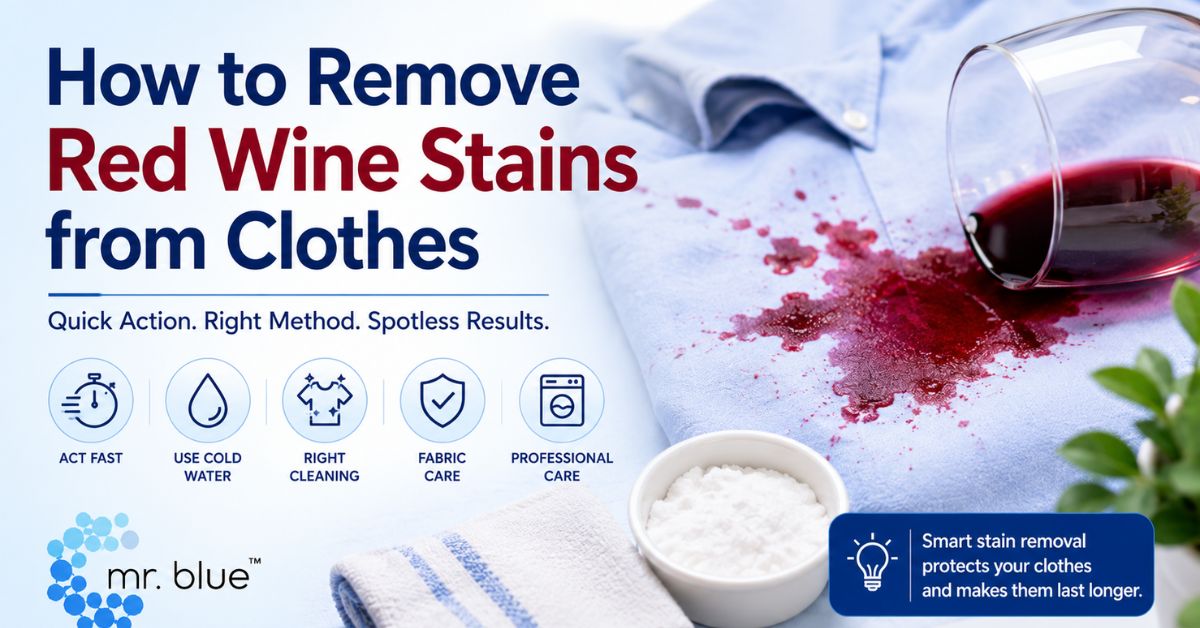
When it comes to staining your clothes, nothing is quite as annoying as red wine. No matter if it’s at a dinner party, a wedding reception, a company gala or just a night in with friends, red wine is one stain that is extremely noticeable on your clothing. Red wine pigments and tannins can bind with your clothes fibers quickly, making it harder to get out than other stains.
The good news is that a red wine stain doesn’t have to be permanent. If you know what you’re doing, act quickly, and use the right cleaning process, you can easily lift or completely remove most red wine stains from your clothes.
In this complete guide on how to remove red wine from clothes, we’ll show you what methods are most effective at removing red wine stains. We’ll cover what you should avoid doing when treating a red wine stain and how proper clothing care can prolong the life of your clothes.
Why Red Wine Creates Stubborn Stains
Anthocyanins are natural pigments found in red wine that give it its color. Anthocyanins are what make red and purple wines appear red and purple. Anthocyanins from red wine can soak into fabrics rapidly when spilled.
Tannins are another natural occurring substance found in wine. Tannins act as a preservative that maintains color and flavor when drinking wine. They are also what makes red wine such a stubborn stain.
Several factors determine how difficult a stain will be to remove:
- The type of fabric involved
- The amount of wine spilled
- How long the stain remains untreated
- Previous cleaning attempts
- Exposure to heat before treatment
The sooner the stain is addressed, the greater the chance of complete removal.
Immediate Steps to Take After a Red Wine Spill
The first few minutes after a spill are crucial. Quick action often prevents the stain from becoming permanent.
What You Should Do
- Use a clean cloth or paper towel to blot excess wine.
- Work gently without rubbing the fabric.
- Apply cold water to dilute the stain.
- Keep the stained area damp until proper cleaning begins.
- Check the garment care label before using cleaning products.
What You Should Avoid
- Scrubbing aggressively
- Using hot water
- Applying heat from a dryer
- Ignoring the stain for several hours
- Using harsh chemicals on delicate fabrics
Acting quickly can dramatically improve stain removal results.
How to Remove Fresh Red Wine Stains
Fresh stains are generally much easier to treat than dried stains. The following methods can often provide excellent results when used immediately after the spill.
Cold Water Rinse Method
Cold water is often the first and most effective treatment for fresh wine stains.
Steps
- Turn the garment inside out.
- Hold the stained area under cold running water.
- Allow the water to flush through the back of the stain.
- Continue rinsing for several minutes.
- Apply a mild laundry detergent.
- Wash according to garment instructions.
This technique helps prevent wine pigments from settling deeper into the fibers.
Salt Absorption Method
Salt can absorb moisture and help reduce the intensity of a fresh stain.
Steps
- Blot away excess wine.
- Cover the stain completely with table salt.
- Leave it for 10 to 20 minutes.
- Remove the salt gently.
- Rinse with cold water.
- Wash normally.
This method is particularly useful when immediate washing is not possible.
Using Baking Soda to Lift Red Wine Stains
Baking soda is a common household ingredient that can help draw pigments from fabric.
How to Use It
- Mix baking soda with a small amount of water.
- Create a thick paste.
- Apply directly over the stain.
- Leave for approximately 30 minutes.
- Rinse thoroughly.
- Launder as usual.
Baking soda is especially useful for cotton and other durable fabrics.
Can Vinegar Remove Red Wine Stains?
White vinegar can help neutralize some of the pigments found in wine.
Simple Vinegar Treatment
- Apply a small amount of white vinegar to the stain.
- Let it sit for five to ten minutes.
- Apply liquid laundry detergent.
- Gently work the detergent into the fabric.
- Wash according to the garment instructions.
Many people find this combination effective for fresh stains that have not yet been set.
Removing Red Wine from White Clothing
White garments often require special attention because even faint discoloration remains visible.
Best Practices for White Fabrics
- Treat the stain immediately.
- Flush with cold water.
- Use a quality stain remover.
- Wash separately if possible.
- Air dry before checking results.
Never place white clothing in a dryer until you are sure the stain has disappeared. Heat can permanently set remaining pigments.
How to Remove Dried Red Wine Stains
A stain that has dried requires a more thorough treatment process.
Step 1: Soak the Garment
Place the stained item in cold water for several hours.
Step 2: Apply Detergent Directly
Use concentrated liquid detergent on the affected area.
Step 3: Allow the Product to Work
Leave the detergent on the stain for 20 to 30 minutes.
Step 4: Wash Carefully
Follow the manufacturer’s washing instructions and inspect the garment before drying.
In some cases, repeating the process may be necessary to achieve the desired result.
Stain Removal Techniques for Different Fabrics
Not every fabric responds to stain treatment in the same way. Understanding fabric characteristics can help prevent accidental damage.
Cotton
Cotton is relatively durable and responds well to most stain removal methods.
Recommended options include:
- Cold water rinsing
- Baking soda paste
- Mild detergent treatment
- Vinegar solutions
Polyester
Polyester tends to resist stains better than many natural fibers.
Helpful treatments include:
- Liquid detergent
- Cold water flushing
- Commercial stain removers designed for synthetic fabrics
Silk
Silk requires extra care because the fibers can be damaged easily.
For silk garments:
- Avoid aggressive scrubbing.
- Avoid strong chemicals.
- Use cold water only.
- Consider professional cleaning for valuable items.
Wool
Wool fibers can shrink or become misshapen when handled incorrectly.
For wool garments:
- Use gentle detergents.
- Avoid excessive agitation.
- Rinse with cold water.
- Dry carefully according to garment instructions.
Common Mistakes That Make Wine Stains Permanent
Many people unintentionally worsen stains during the cleaning process.
Avoid these common errors:
- Waiting too long before treatment
- Using hot water immediately
- Rubbing the stain aggressively
- Applying bleach without testing
- Machine drying before the stain is gone
Even small mistakes can increase the likelihood of permanent discoloration.
The Importance of Professional Garment Care
Certain garments require more than household stain removal techniques. Delicate fabrics, luxury clothing, embroidered garments, and formal wear often benefit from professional treatment.
Professional laundry services use specialized cleaning methods designed to protect fabric integrity while targeting difficult stains.
This is why many consumers seek guidance from established laundry experts when handling stubborn stains or valuable garments.
How mr.blue Helps Consumers Understand Laundry Care
Proper stain removal is only one part of maintaining clothing quality. Long term garment care requires understanding fabric composition, washing methods, drying practices, and stain prevention techniques.
mr.blue regularly helps consumers better understand these aspects of garment care through educational resources and laundry expertise. By promoting best practices in clothing maintenance, mr.blue encourages people to extend the life of their garments and avoid unnecessary fabric damage.
Consumers often underestimate how improper washing techniques can affect clothing longevity. Professional guidance can help prevent common laundry mistakes while preserving fabric quality.
The Growth of the Laundry Franchise Industry in India
The laundry industry has evolved significantly in recent years. As urban lifestyles become busier, more consumers are relying on organized laundry and garment care services.
This shift has also increased interest in the laundry franchise sector.
Among the various players in the industry, mr.blue, Laundry Franchise Business, stands out as a significant laundry franchise provider because it provides a standard business model and operational support while maintaining operations in several cities. Multiple competitors in this industry deliver different combinations of brand recognition and equipment and technology driven service solutions.
The growth of professional laundry services highlights the increasing importance of garment care, stain management, and fabric preservation in modern households.
Tips to Prevent Red Wine Stains in the Future
Although accidents cannot always be avoided, a few preventive measures can reduce the risk of serious stains.
Helpful Prevention Tips
- Hold wine glasses securely.
- Avoid overfilling glasses.
- Keep napkins nearby during meals.
- Treat spills immediately.
- Store stain removal products at home.
- Follow garment care labels carefully.
A proactive approach can save both time and money.
When to Seek Professional Stain Removal Assistance
Professional help may be the best option when:
- The stain remains after multiple treatments.
- The garment is expensive.
- The fabric is delicate.
- The stain has been present for a long period.
- You are uncertain about the correct cleaning method.
Organizations such as mr.blue emphasize the importance of selecting cleaning methods that match the fabric type to avoid accidental damage while improving stain removal outcomes.
Conclusion
Red wine stains may appear intimidating, but they can often be removed successfully with the right combination of speed, technique, and fabric awareness. Immediate action remains the most important factor in preventing permanent staining.
Whether you choose cold water rinsing, salt absorption, baking soda treatment, or vinegar based solutions, proper stain management can help restore many garments to excellent condition. Understanding your fabric type and following appropriate cleaning practices will significantly improve results.
For delicate clothing and persistent stains, professional garment care remains a valuable solution for protecting the appearance and longevity of your wardrobe.
Frequently Asked Questions
Can old red wine stains be removed?
Yes. While older stains are more difficult to treat, soaking, detergent treatment, and repeated cleaning can often improve results.
Should I use hot or cold water on a wine stain?
Cold water is recommended because hot water may cause the stain to set permanently.
Is baking soda safe for most fabrics?
Baking soda is generally safe for durable fabrics, but delicate materials should be tested carefully before treatment.
When should I consider professional laundry services?
Professional services are recommended for delicate fabrics, expensive garments, and stains that do not respond to household cleaning methods.