

It’s every girl’s nightmare. You just spilled nail polish on your favorite shirt! Nail paint contains large amounts of pigment and color. And when it lands on your clothes, it can leave behind permanent-looking stains. You may have tipped over a bottle of nail polish while painting your nails or bumped into someone’s freshly painted nails.
Whatever the case may be, accidents happen and if you know how to get nail paint out of clothes, you’ll be back in business in no time.
In this article, we will show you several tried and true ways to remove nail paint from clothing. We’ll go over what you can do immediately after the stain occurs as well as methods to remove even the most stubborn stains. But first, let’s look at what nail polish does to your clothes.
Understanding Nail Polish and Fabric Interaction
Before learning how to remove nail polish stains from fabrics, you should know why it’s such a challenge. Nail polish has polymers that give the lacquer strength and durability against chipping. Because it’s quick-drying, it bonds fast to fabric fibers and stays put due to pigments added to make it opaque and colorfast. Nail polish contains nitrocellulose, resins, plasticizers and colorants dissolved into volatile organic solvents such as ethyl acetate and butyl acetate.
On contact with clothing or fabric, the solvents quickly evaporate leaving behind a cured film of polymers sandwiched between fabric fibers. Hence the key is to act quickly. Nail polish is much easier to remove when it’s wet. Allowing time for the polish to dry on clothes will cause polymers to further cure and bond with cotton threads or whatever fabric your clothing is made of.
Different fabrics react differently to nail polish:
- Natural fibers like cotton and linen tend to absorb the polish deeply but respond well to acetone-based treatments
- Synthetic materials such as polyester and acetate may dissolve when exposed to harsh solvents like acetone
- Delicate fabrics including silk and wool require gentle, specialized approaches
- Blended fabrics present unique challenges and may need customized treatment methods
Immediate Action Steps for Fresh Nail Polish Stains
The moment nail polish touches your clothing, your response determines how successfully you can remove it. Taking the right immediate actions can mean the difference between complete stain removal and permanent discoloration.
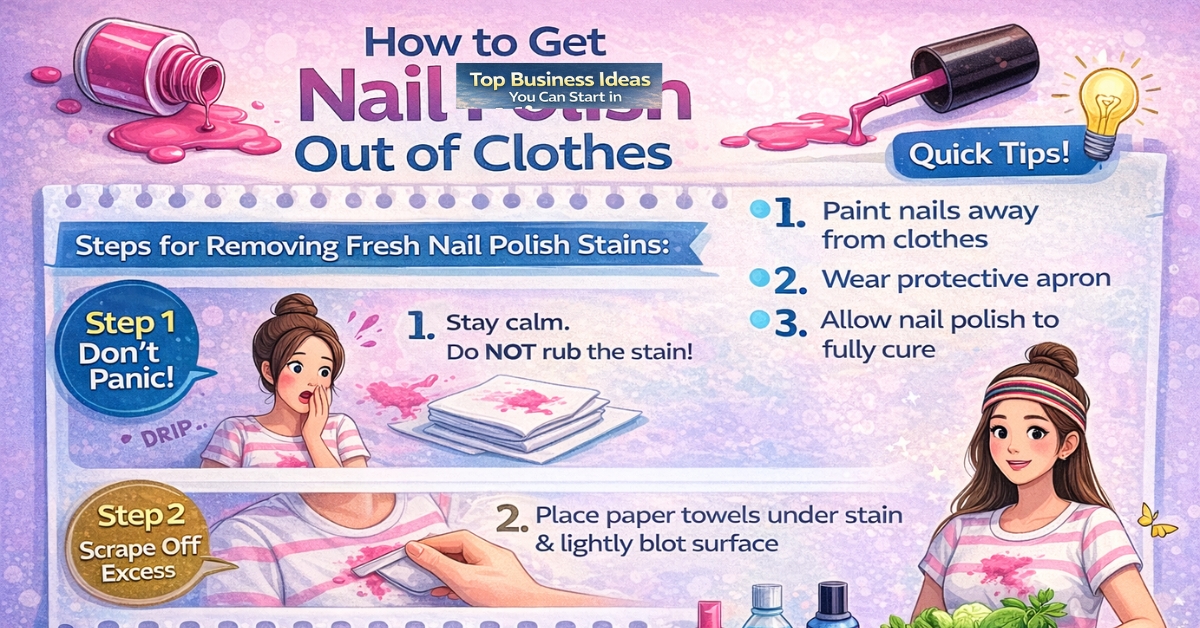
Step 1: Do Not Panic or Rub
Your first instinct might be to immediately rub or wipe the stain, but resist this urge. Rubbing fresh nail polish spreads it deeper into the fabric fibers and enlarges the affected area. Instead, remain calm and follow these precise steps to contain the damage.
Step 2: Blot Gently with Paper Towels
Place clean paper towels or a cloth beneath the stained area to prevent the polish from transferring to other parts of the garment. Using another paper towel, gently blot the surface of the stain. Apply light pressure and lift straight up. Avoid any circular or rubbing motions. Continue blotting with fresh paper towels until no more wet polish transfers.
Step 3: Scrape Excess Polish Carefully
If the nail polish is beginning to dry or you notice a thick layer, use a blunt edge like a spoon, butter knife, or credit card to gently scrape away the excess. Hold the fabric taut and work from the outside of the stain toward the center to prevent spreading. This mechanical removal reduces the amount of solvent needed later and improves your chances of complete stain removal.
Effective Methods to Remove Dried Nail Polish from Different Fabrics
Once nail polish has dried, removal becomes more challenging but remains possible with the right techniques. The method you choose should depend on your fabric type, the age of the stain, and the materials you have available.
Method 1: Acetone-Based Nail Polish Remover (For Durable Fabrics)
Acetone is the most powerful solvent for breaking down nail polish polymers. This method works exceptionally well on cotton, denim, linen, and other natural, durable fabrics. However, never use acetone on acetate, triacetate, modacrylic, or other synthetic materials as it will dissolve these fibers.
Application process:
- Test the acetone on an inconspicuous area first to ensure colorfastness
- Place absorbent paper towels underneath the stained area
- Apply acetone-based nail polish remover directly to the stain using a cotton ball
- Gently dab and blot, working from the outside edges toward the center
- Replace the paper towels beneath frequently as they absorb the dissolved polish
- Continue until no more color transfers to the cotton ball
- Rinse the area thoroughly with cold water
- Wash the garment immediately following the care label instructions
Method 2: Rubbing Alcohol (For Sensitive and Synthetic Fabrics)
Isopropyl alcohol, commonly known as rubbing alcohol, offers a gentler alternative to acetone while still effectively dissolving nail polish. This method is safer for colored fabrics, synthetic materials, and garments with special finishes. Use 70 percent or higher concentration for best results.
Step-by-step approach:
- Perform a spot test on a hidden seam or hem to check for any adverse reactions
- Saturate a clean white cloth with rubbing alcohol
- Place the cloth directly on the stain and let it sit for 10 to 15 minutes
- Gently blot and dab the stain. You should see the polish beginning to lift
- Use a soft-bristled toothbrush to work the alcohol into stubborn areas with gentle circular motions
- Reapply rubbing alcohol as needed, always using a fresh section of cloth
- Rinse thoroughly with cold water once the stain is removed
- Launder the garment according to its care instructions
Method 3: Hairspray (Quick Emergency Solution)
Traditional hairsprays contain solvents similar to those in nail polish removers, making them surprisingly effective for emergency stain treatment. While not as powerful as dedicated removers, hairspray works well for small stains and when you do not have access to other products. Choose older-formula hairsprays with higher alcohol content for better results.
Spray the hairspray liberally over the nail polish stain, saturating it completely. Allow it to sit for several minutes to break down the polish. Use a clean cloth to blot and absorb the dissolved polish. Repeat the process multiple times if necessary. Once removed, wash the area with dish soap and water to eliminate any sticky residue from the hairspray, then launder normally.
Method 4: Hydrogen Peroxide (For White and Colorfast Fabrics)
Hydrogen peroxide serves as both a solvent and a mild bleaching agent, making it particularly effective on white fabrics and tough stains. This method works best on cotton, linen, and other natural fibers that can tolerate mild bleaching without damage.
Mix equal parts hydrogen peroxide (3 percent solution) and water in a small bowl. Apply the solution generously to the stain using a cotton ball or clean cloth. For stubborn stains, you can use undiluted hydrogen peroxide. Let the solution sit on the stain for 5 to 10 minutes, watching for any fizzing action. Gently scrub with a soft brush, then rinse thoroughly with cold water. Repeat if needed before washing the garment as usual.
Special Considerations for Delicate and Specialty Fabrics
Silk and Satin
Silk is particularly vulnerable to harsh chemicals and requires gentle handling. Never use acetone on silk as it will damage the protein fibers. Instead, try a mixture of lukewarm water and a small amount of mild dish soap. Dab gently with a soft cloth, being careful not to rub or stretch the fabric. For dry-clean-only garments, consult a professional cleaner.
Wool and Cashmere
Wool fibers can shrink and felt when exposed to heat, friction, or harsh chemicals. Use non-acetone nail polish remover or rubbing alcohol sparingly. Blot gently without rubbing. Rinse with cool water immediately and air dry flat.
Leather and Suede
Leather and suede require special care. Traditional removers can strip natural oils and damage finishes. For leather, test rubbing alcohol on an inconspicuous area first. For suede, a suede eraser or very fine sandpaper may help. When in doubt, consult a professional cleaner.
Common Mistakes to Avoid
- Never apply heat before the stain is completely removed
- Avoid aggressive rubbing or scrubbing
- Do not mix different cleaning products
- Never skip a spot test
How mr.blue Can Help You Handle Difficult Laundry Challenges
While many nail polish stains can be treated at home, some situations require professional expertise. This is especially true for delicate, expensive, or set-in stains. At mr.blue, professional laundry specialists assess each garment individually and apply the safest and most effective treatment based on fabric type and stain severity.
For busy professionals and students, mr.blue offers a convenient solution that saves time and eliminates the risk of garment damage. Instead of experimenting with multiple methods, you can rely on expert care and proven techniques.
Whether it is a nail polish emergency or routine laundry needs, mr.blue delivers reliable, high-quality service.
Prevention Tips: Avoiding Nail Polish Accidents
- Paint nails in a designated area away from clothes
- Wear old clothing or a protective apron
- Allow nail polish to fully cure before dressing
- Use protective coverings when painting near furniture or carpets
When to Seek Professional Help
- Dry-clean-only garments
- Expensive or sentimental clothing
- Repeated failed home removal attempts
Dealing with Specific Nail Polish Types
Glitter Nail Polish
Use tape, lint rollers, or dried hair gel to lift remaining glitter particles.
Gel Nail Polish
Pure acetone works best. Allow longer soaking times of 15 to 20 minutes and repeat as needed.
Dark or Highly Pigmented Colors
Use enzyme-based stain removers or oxygen bleach after polish removal.
Final Washing and Care After Stain Removal
Pre-treat with liquid detergent, wash in the hottest safe water, inspect before drying, and air dry initially to ensure complete removal.
Conclusion
Removing nail polish from clothes does not have to be stressful when you follow the right techniques. Quick action, fabric-appropriate methods, and patience are key to success. Prevention helps avoid accidents, but when they happen, this guide equips you to handle them confidently.
For delicate garments or stubborn stains, professional services like mr.blue offer expert care and peace of mind. With the right approach, your favorite clothes can be restored to their pristine condition.
Frequently Asked Questions
How quickly should I act?
Immediately, but dried stains can still be treated successfully.
What if the stain spreads?
Stop, blot from the edges inward, and switch to a gentler method.
Is nail polish remover safe for colored clothes?
Test first. Non-acetone removers are generally safer.
Can professionals remove old stains?
Yes. Professionals have access to stronger solvents and specialized techniques.