

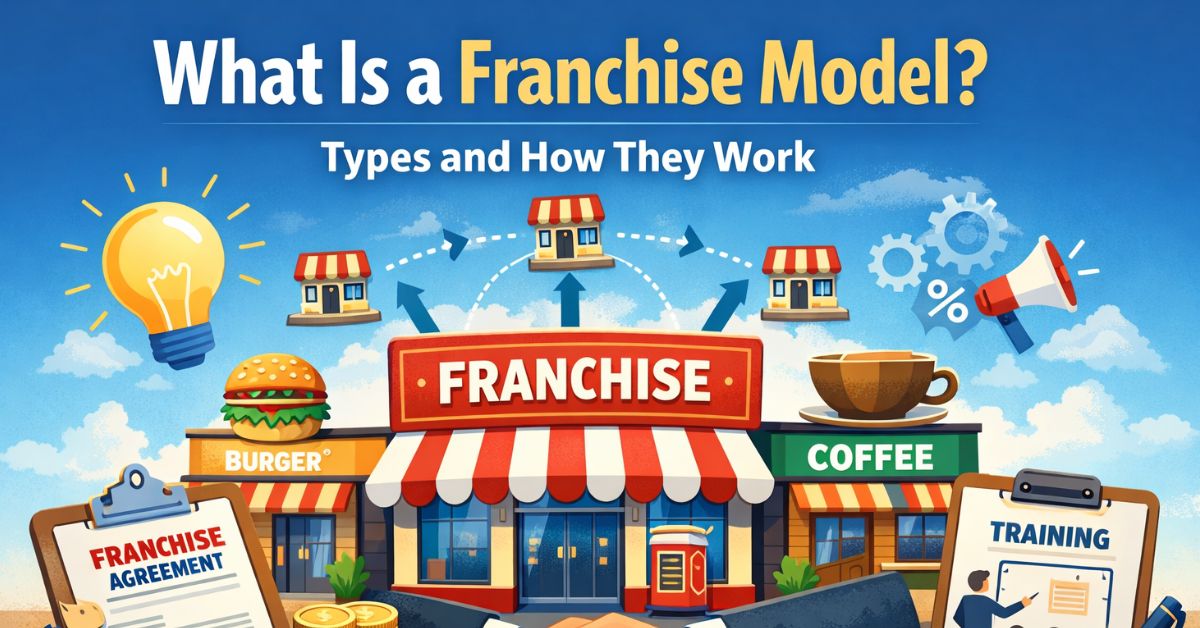
Whether it’s food chains or laundry and dry cleaning franchise businesses, franchising is one of the most lucrative and scalable models used by entrepreneurs across businesses globally. The reason franchising is extremely powerful is because it allows business owners to scale their businesses with much lesser risk. But what exactly is a franchise model? How does a franchise work?
In this ultimate guide, we’ll cover what a franchise model is, its types, how it works, its advantages and disadvantages and much more. We’ll also cover how mr.blue can help entrepreneurs looking to enter into businesses like Laundry Franchise Business with utmost clarity on how their business will operate.
Understanding the Franchise Model
Franchising is an agreement between two parties. One that owns a brand or products and the systems that come with it and wants to expand (the franchisor) and one who wishes to operate a business under the franchisor’s brand name (the franchisee).
Essentially it is someone else’s brand that you operate as your own business.
Key Elements of a Franchise Model
- Franchisor: The brand owner who provides business systems, branding, and support
- Franchisee: The individual or entity that operates the business under the brand
- Franchise Fee: Initial cost paid to acquire franchise rights
- Royalty Fee: Ongoing payments based on revenue or profits
- Business System: Standardized operations, processes, and guidelines
This model is widely adopted because it reduces the uncertainty associated with starting a business from scratch.
Why the Franchise Model Is So Popular
Franchising has gained global popularity due to its ability to scale quickly while maintaining consistency across locations.
Major Reasons Behind Its Growth
- Proven business concept reduces startup risk
- Established brand recognition attracts customers faster
- Access to training and operational support
- Easier scalability across cities and regions
- Strong supply chain and vendor networks
Laundry business is one of these examples. Services based businesses have flourished using the franchise models. Companies such as mr.blue that are present in many cities provides you with not just the Laundry Franchise Business but an operating system along with local execution.
Types of Franchise Models
Understanding the different types of franchise models is crucial before investing. Each type serves different industries and business goals.
1. Product Distribution Franchise
In this model, franchisees sell products supplied by the franchisor. The focus is primarily on distribution rather than branding systems.
Examples include:
- Automobile dealerships
- Beverage distributors
2. Business Format Franchise
This is the most common and comprehensive type. The franchisor provides not just products but also branding, operations, marketing, and training systems.
Key Features:
- Complete business blueprint
- Standardized processes
- Marketing and branding support
- Training and operational manuals
Laundry services, food chains, and retail businesses often follow this model. The mr.blue platform operates in a similar structured format, ensuring consistency in service delivery and operational efficiency.
3. Manufacturing Franchise
Here, the franchisee is allowed to manufacture products using the franchisor’s brand name and specifications.
Examples:
- Food and beverage manufacturing units
- Packaged goods production
4. Conversion Franchise
This model converts independent businesses into franchise units under a larger brand.
Common in:
- Real estate agencies
- Service-based businesses
5. Job Franchise
A small-scale franchise operated by an individual or a small team, usually requiring low investment.
Examples:
- Cleaning services
- Home-based services
- Mobile repair services
How the Franchise Model Works
The functioning of a franchise model is systematic and structured. It ensures uniformity across all franchise locations.
Step-by-Step Working Process
1. Agreement Between Franchisor and Franchisee
A legal contract defines the rights, responsibilities, and operational guidelines.
2. Initial Investment
The franchisee pays a franchise fee to gain access to the brand and business model.
3. Training and Setup
The franchisor provides training, site selection support, and operational setup guidance.
4. Business Operations
The franchisee runs the business following standardized processes.
5. Ongoing Support
The franchisor offers continuous support, marketing assistance, and system upgrades.
6. Revenue Sharing
Franchisees pay royalties or a percentage of revenue to the franchisor.
Key Components of a Successful Franchise System
A franchise model succeeds when certain elements are well structured and consistently executed.
Essential Components
- Strong brand identity
- Standard operating procedures
- Continuous training programs
- Efficient supply chain management
- Marketing and promotional strategies
- Technology integration
In industries like laundry services, operational efficiency and consistency are critical. Businesses such as mr.blue emphasize system-driven operations, which help franchisees maintain quality across locations.
Advantages of the Franchise Model
Franchising offers numerous benefits for both franchisors and franchisees.
Benefits for Franchisees
- Lower risk compared to starting a new business
- Access to established brand reputation
- Ready-to-use business systems
- Training and operational support
- Easier access to funding
Benefits for Franchisors
- Rapid business expansion
- Reduced capital investment
- Local market expertise from franchisees
- Increased brand visibility
Challenges in the Franchise Model
Despite its advantages, franchising comes with certain challenges.
Common Challenges
- Limited operational flexibility
- Ongoing royalty payments
- Dependence on franchisor decisions
- Risk of brand reputation issues due to other franchisees
- Initial investment can be high
Understanding these challenges helps in making informed decisions before investing.
Franchise Model in the Laundry Industry
The laundry industry is one of the fastest-growing sectors adopting franchising. Urban lifestyles, time constraints, and increasing demand for convenience services have driven this growth.
Why Laundry Franchises Are Growing
- Rising demand for professional cleaning services
- Increasing urban population
- Time-saving solutions for consumers
- Recurring customer base
Laundry Franchise Business offers repeat business once you find your market. That’s why The Laundry Franchise Business is such a great option. Not only is there a demand for it, but it’s also easily scalable. Companies like mr.blue have created systems using smart technology, streamlined operations, and consistent branding.
How mr.blue Helps Guide Franchise Entrepreneurs
In the evolving landscape of franchising, having the right guidance is essential. Platforms like mr.blue play a significant role in helping entrepreneurs understand and execute franchise opportunities effectively.
Key Ways mr.blue Supports Business Owners
- Provides a standardized business model
- Offers operational and process guidance
- Ensures consistency across multiple locations
- Supports technology-driven service management
- Helps maintain quality and customer satisfaction
Rather than just offering a brand name, structured platforms enable entrepreneurs to operate efficiently within a proven system. This approach is particularly valuable in service industries like laundry, where consistency and operational precision are critical.
Factors to Consider Before Choosing a Franchise
Selecting the right franchise requires careful evaluation.
Important Factors
- Industry demand and growth potential
- Brand reputation and market presence
- Initial investment and ROI expectations
- Training and support provided
- Operational complexity
- Location and target market
Steps to Start a Franchise Business
Starting a franchise involves a systematic approach.
Step-by-Step Guide
- Research different industries and franchise options
- Evaluate the franchisor’s credibility
- Understand the financial requirements
- Review the franchise agreement carefully
- Choose the right location
- Complete training and setup
- Launch operations with marketing support
Future of the Franchise Model
The franchise model continues to evolve with advancements in technology and changing consumer behavior.
Emerging Trends
- Digital integration in operations
- Data-driven decision making
- Expansion into service-based industries
- Focus on customer experience
- Sustainable and eco-friendly business practices
The integration of technology is transforming traditional franchise systems into more efficient and scalable models.
Conclusion
Franchising is a successful business model that allows entrepreneurs to build their own business while utilizing an existing proven system. There are different types of franchising options to explore based on how much you want to invest in your business.
Service-based businesses are one of the booming businesses today. As the world is evolving, so are the lifestyles of people. If you are looking to get into the Laundry Franchise Business, take help from platforms like mr.blue. They offer you a standardized system along with guided operations to help you through your business.
Here’s what you should know about how franchising works and the pros and cons of it.
Frequently Asked Questions
What are the main types of franchise models?
The main types include product distribution, business format, manufacturing, conversion, and job franchises.
Is franchising a low-risk business option?
Franchising is generally lower risk than starting a business from scratch because it uses a proven model, but it still involves financial and operational risks.
How does a laundry franchise business work?
A laundry franchise operates using standardized systems for cleaning, logistics, and customer service, often supported by technology and centralized processes.
How can platforms like mr.blue help in franchising?
Platforms like mr.blue guide entrepreneurs by providing structured business models, operational support, and standardized systems, making it easier to manage and scale franchise operations.