

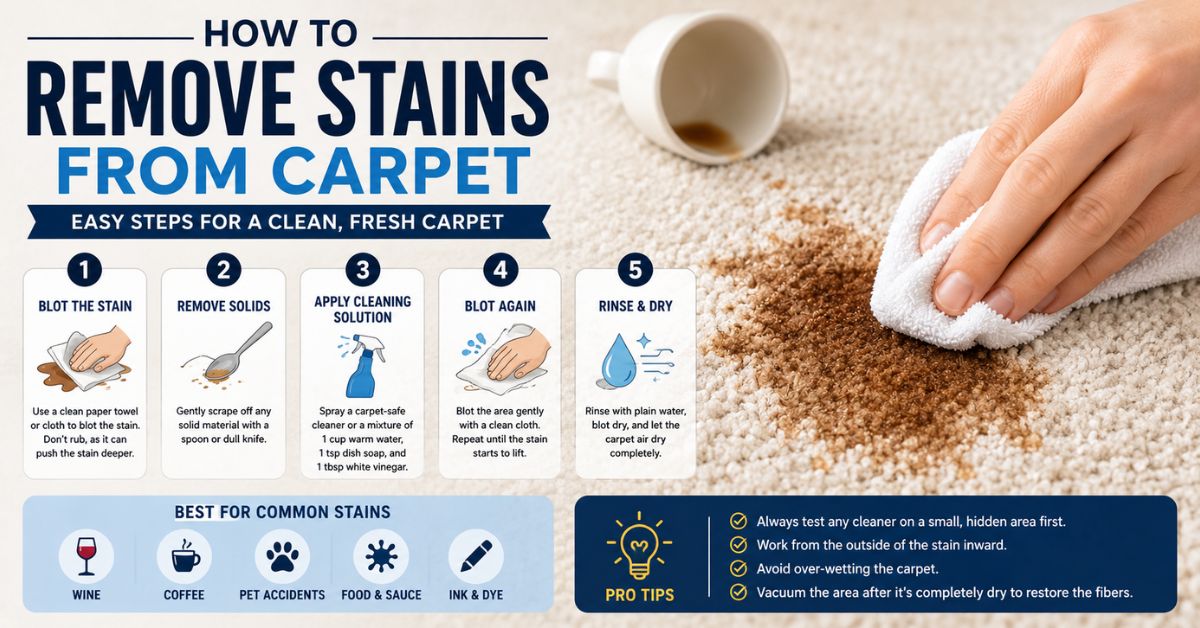
Carpets can warm up a room, add texture and sophistication like nothing else can — but they also attract spills, pet messes, mud from dirty boots and those pesky mystery stains that magically appear overnight. If you’ve just spilled coffee or want to get out that old grease stain, there’s a proper way to handle carpet stains to avoid setting them in forever.
Below is a complete guide to simple and effective techniques for tackling every kind of carpet stain. We show you how to use common household items as well as professional methods. Keep reading for ways to treat your carpet right.
Why Acting Quickly Is the Golden Rule of Stain Removal
Timing is the key element when it comes to removing stains. The longer a spill sits on carpet fibres, the further it sinks in and the tighter it binds to carpet fibres. Stains that are treated within minutes are much easier to remove than those that are allowed to sit overnight.
Another important rule to remember is to always blot, never rub. Rubbing forces the stain outwards and deeper into fibres. Blotting lifts the offending material up and out of the carpet. Use a white paper towel or cloth and start from the outside edge of the stain and work your way in.
Essential Supplies to Keep on Hand
Before diving into specific stain types, stock your cleaning kit with these basics:
- Cold water and a spray bottle
- White clean cloths or microfibre towels
- Liquid dish soap (clear or white, dye-free)
- White distilled vinegar
- Baking soda
- Hydrogen peroxide (3% solution)
- Rubbing alcohol (isopropyl)
- Commercial carpet stain remover
- A soft-bristled brush
- Dry absorbent powder or cornstarch
Step-by-Step Guide: How to Remove Common Carpet Stains
1. Coffee and Tea Stains
Coffee and tea are tannin-based stains that discolour carpet quickly. Blot up as much liquid as possible first. Mix one tablespoon of liquid dish soap with one tablespoon of white vinegar and two cups of warm water. Apply the solution to the stain using a clean cloth, blotting repeatedly until the stain lifts. Rinse with cold water and blot dry.
2. Red Wine Stains
Pour a small amount of cold water on the stain to dilute it. Blot thoroughly. Sprinkle baking soda generously over the area and let it sit for three to five minutes to absorb the remaining wine. Vacuum up the powder, then apply a mixture of dish soap and hydrogen peroxide (in a 1:3 ratio). Blot until the stain disappears, then rinse with cold water.
3. Grease and Oil Stains
Cover the stain with a generous layer of baking soda or cornstarch and let it sit for at least 15 minutes to absorb the grease. Vacuum the powder away. Apply a small amount of dish soap directly to the stain, working it gently into the fibres with a soft brush. Blot with a clean cloth dampened in warm water, and repeat as needed.
4. Pet Urine and Odour Stains
Pet stains require a two-step approach: stain removal and odour neutralisation. Blot up as much of the urine as possible. Apply a solution of equal parts white vinegar and water, then blot dry. Once dry, sprinkle baking soda over the area and let it sit for several hours or overnight. Vacuum thoroughly. For persistent odours, use an enzyme-based cleaner specifically designed for pet stains — these break down the odour-causing proteins at a molecular level.
5. Ink Stains
Dampen a clean cloth with rubbing alcohol and gently blot the ink stain — do not rub. The alcohol dissolves the ink and lifts it away from the fibres. Continue blotting with a fresh part of the cloth each time to avoid re-depositing the ink. Once the stain is gone, rinse with cold water and blot dry.
6. Mud and Dirt Stains
Counterintuitively, you should let mud dry completely before attempting to clean it. Dried mud is far easier to remove than wet mud, which smears and spreads when agitated. Once dry, scrape or vacuum away as much as possible. Then apply a dish soap and water solution, blot, and rinse.
When DIY Is Not Enough: Professional Help Makes a Difference
But sometimes, home remedies just won’t work. Whether it’s an ink stain from a permanent marker, bleach stain, set-in grease stain or something that covers a large area of your carpet, you’ll need professional stain removal. You also don’t want to risk washing delicate fabrics like wool, silk, or heirloom rugs yourself.
That’s when the pros can help. At mr.blue, we do more than just laundry. Our knowledge of fabrics and different types of stains means we can treat your clothes, sofa, and carpet with the special care they need to not only get rid of the stain, but to keep your fabrics safe. mr. blue may be best known for our luxury laundry and dry cleaning service, but upholstery cleaning uses many of the same processes.
Carpet Stain Removal: Dos and Don’ts
What you should always do:
- Blot stains immediately — time is your most powerful tool
- Always test any cleaning solution on a hidden area of the carpet first
- Work from the outside of the stain inward to prevent spreading
- Use cold water for protein-based stains (blood, egg, dairy)
- Allow the carpet to dry completely after cleaning to prevent mould
- Vacuum regularly to prevent dirt from bonding to fibres
What you should never do:
- Never rub a stain — rubbing spreads it and damages carpet fibres
- Never use hot water on protein-based stains; it sets them permanently
- Never mix bleach with vinegar or ammonia — the fumes are toxic
- Never over-wet the carpet; excess moisture promotes mildew growth
- Never use coloured cloths that may transfer dye onto the carpet
- Never scrub aggressively with a stiff brush on delicate carpet types
Natural and Eco-Friendly Stain Removal Alternatives
If you prefer to avoid chemical-based cleaners, several natural options work surprisingly well on carpet stains.
- Baking Soda: An all-purpose absorber and deodoriser. Sprinkle it on damp stains, let it sit, and vacuum. It works well on grease, pet odours, and general discolouration.
- White Vinegar: A natural acidic cleaner that cuts through many common stains including coffee, wine, and food spills. Always dilute with water (1:1 ratio) before applying to carpet.
- Club Soda: The carbonation in club soda helps lift fresh stains from carpet fibres. Pour a small amount directly on the stain, let it fizz for 30 seconds, then blot away.
- Lemon Juice and Salt: Effective on rust and light mildew stains. Apply lemon juice, cover with salt, let it sit for a few hours in sunlight if possible, then vacuum and rinse.
How mr. blue Can Guide You in Fabric and Stain Care
Knowing how to treat a stain is just one element of understanding fabrics and textiles. That’s where mr. blue comes in handy. Our experts know what causes stains to bond to your fabrics, which materials are more delicate than others, and what kind of treatment they will need to effectively clean your fabric without damaging it.
If you are worried about what kind of cleaning process will be safe on your carpet’s material, or you have a clothing item with a stain that just won’t go away – never fear! mr. blue has you covered with our professional-grade laundry and dry cleaning service. We take the same care into laundering your clothes that we do when cleaning carpets. Each material is treated with respect and we determine what the best, most effective process will be.
When you’re a busy professional, student or just always seem to be short on time, it’s nice to know that you have professionals caring for your clothes or taking care of your home textiles.
Long-Term Carpet Care: Prevention Is Better Than Cure
The only stain you want to have is the stain you never have. Simple routines can cut down on carpet stains tremendously in the long run.
Spray your carpets with a protector or stain-resistance spray every six months to a year. These products work by forming a microscopic barrier over carpet fibres that causes liquids to bead up and roll off instead of soaking in. Put down doormats by any entrances to your home. This will help catch dirt before it gets onto the carpets. Make your house a shoes-off zone, especially where carpet is involved. Vacuum regularly. A quick once over each week will help prevent outdoor dirt from becoming embedded in your carpet. Every time you walk across a carpet surface that dirt acts like sandpaper on the fibres.
Have your carpets professionally deep-cleaned once or twice a year, especially if you have heavy traffic. Steam cleaning reaches far below the surface and refreshes carpet fibres by extracting ground-in dirt, allergens and residue that regular vacuuming can’t match.
Final Thoughts
Removing stains from carpet does not have to be a stressful experience. With the right knowledge, a calm approach, and the correct supplies within reach, most common stains can be tackled quickly and effectively at home. The key is always to act fast, use the right method for the specific stain type, and resist the urge to scrub aggressively.
For stains on clothing, upholstery, and other soft textiles, the same careful, material-aware approach applies. If you want professional guidance on fabric care that goes beyond what a search engine can offer, mr. blue is a trusted resource for premium laundry and dry cleaning services — bringing the same expert care to your wardrobe that this guide recommends for your carpets. Visit to learn more about how quality textile care can protect your investment in clothing and home furnishings alike.
A clean carpet is not just about appearances, it contributes to a healthier indoor environment, extends the life of your flooring, and makes your living space genuinely more comfortable. Take care of your carpets, and they will take care of your home for years to come.
FAQ
Can old, set-in stains be removed from carpet?
Yes, in many cases old stains can be significantly reduced or fully removed, though they do require more effort. Start by rehydrating the stain with warm water, then apply your chosen cleaning solution and allow it to dwell for 10 to 15 minutes before blotting. Multiple treatment rounds may be necessary. Enzymatic cleaners are particularly effective on old organic stains like pet urine, blood, or food.
Is hydrogen peroxide safe to use on all carpets?
Hydrogen peroxide (3% concentration) is safe on most synthetic carpets such as nylon and polyester, but should be used with caution on natural fibre carpets like wool or silk, as it can cause bleaching or colour damage. Always test on a small, inconspicuous area first and wait 10 minutes to check for any discolouration before treating the actual stain.
How do I remove the smell after cleaning a carpet stain?
Residual odour after carpet cleaning usually comes from the stain substance itself (especially pet urine or vomit) or from mildew developing due to excess moisture. Sprinkle baking soda generously over the dried, cleaned area and leave it for at least eight hours or overnight. Vacuum thoroughly. For persistent odours, an enzyme-based neutraliser is the most effective option, as it breaks down the odour molecules rather than simply masking them.
When should I call a professional carpet cleaner instead of doing it myself?
Call a professional when the stain covers a large area, when the carpet material is delicate or high-value (wool, silk, antique rugs), when multiple DIY attempts have failed, when the odour persists despite treatment, or when you are unsure of the carpet fibre type and the risk of damage is high. Professionals have access to industrial-grade equipment and solutions that achieve results that are simply not replicable at home.