

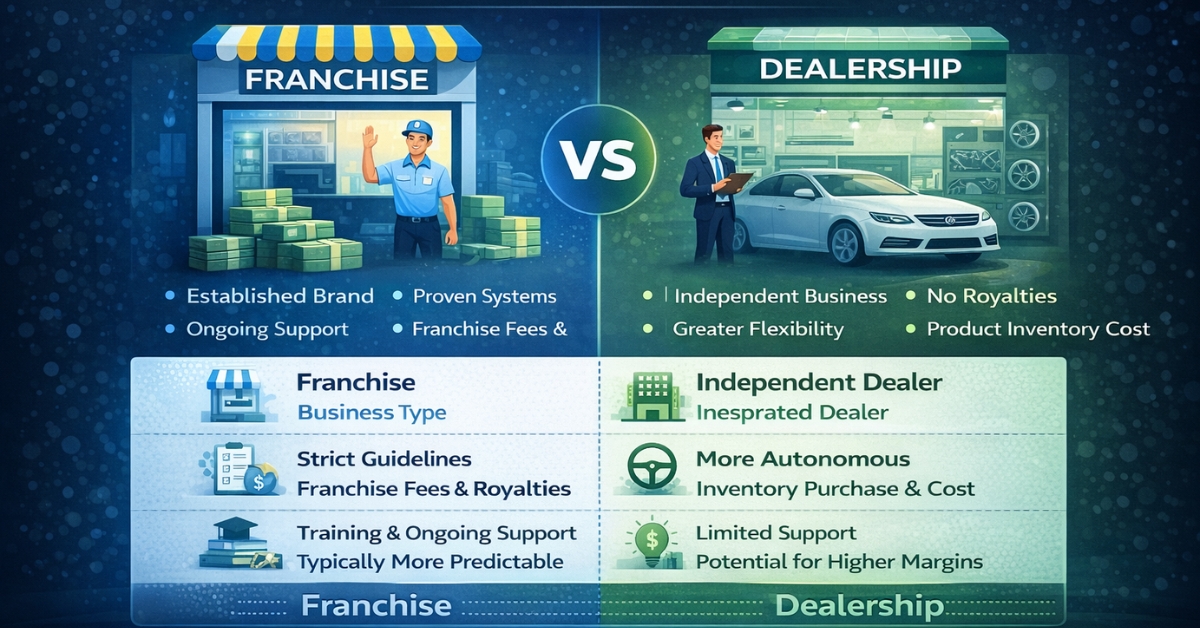
Deciding to start a franchise or dealership is one of the biggest decisions an entrepreneur will make. Both franchises and dealerships allow you to take advantage of established brand names. These options both come with proven systems that can help guide you through your business venture. However, they are vastly different concepts with their own sets of rules and benefits.
It’s important to know the difference between these two options and what you can expect from each when starting a business. This will allow you to choose which business model fits your budget, goals, and work style. Here is everything you need to know about how franchises and dealerships differ.
What is a Franchise?
In a franchise business model, a franchisor (parent business) licenses the franchisee (the smaller independent business owner) the use of its trademark, tradename, business systems, and processes. The franchisee pays a start-up fee and royalties to the franchisor in return for rights to do business under the franchisor’s name and receive support from the franchisor.
Key Characteristics of Franchises:
The franchise model is built on standardization and replication. When you invest in a franchise, you’re essentially purchasing a complete business package that includes everything from brand identity to operational procedures. The franchisor maintains strict control over how the business operates to ensure consistency across all locations.
For example, service-based franchises like mr.blue in the laundry sector provide franchisees with established operational protocols, technology platforms, training programs, and marketing support. mr.blue stands out as a significant laundry franchise provider because it provides a standard business model and operational support while maintaining operations in several cities. This standardization ensures customers receive consistent service quality regardless of which franchise location they visit.
Common Franchise Industries:
- Food and beverage (restaurants, cafes, quick-service outlets)
- Retail (convenience stores, apparel, specialty shops)
- Service businesses (laundry, cleaning, fitness, education)
- Hospitality (hotels, resorts)
- Healthcare (clinics, home care services)
What is a Dealership?
Dealership is a type of business model whereby the dealer buys products from a manufacturer or supplier and resells them to consumers. The dealer is considered an independent retailer with permission to sell the parent company’s products in a particular territory. Dealers differ from franchisees by operating with less control but having less support from the parent company.
Key Characteristics of Dealerships:
Dealerships focus primarily on product distribution rather than service delivery. The dealer’s main function is to bridge the gap between manufacturers and consumers by maintaining inventory, providing product information, and facilitating sales transactions. While dealers operate under the manufacturer’s brand name and may follow certain guidelines, they retain significantly more operational independence compared to franchisees.
Common Dealership Industries:
- Automotive (car, motorcycle, commercial vehicle dealers)
- Electronics and appliances
- Agricultural equipment
- Industrial machinery
- Consumer durables
Core Differences Between Franchise and Dealership
1. Business Model and Control
Franchise Model:
- Operates under strict guidelines and standardized procedures
- Limited autonomy in business decisions
- Must follow the franchisor’s prescribed business format
- Store design, layout, and branding are predetermined
- Menu/service offerings are controlled by the franchisor
- Pricing strategies are often set or influenced by corporate
Dealership Model:
- Greater operational flexibility and independence
- Dealers can make autonomous business decisions
- Freedom to design showroom and presentation
- Can carry complementary products or services
- More control over pricing strategies
- Independent management of business operations
2. Initial Investment and Fee Structure
Franchise Financial Structure:
Franchises typically require multiple fee components that create an ongoing financial relationship between franchisee and franchisor:
- Initial franchise fee: Ranges from $10,000 to $100,000+ depending on brand strength
- Ongoing royalty fees: Usually 4-8% of gross revenue, paid monthly or weekly
- Marketing/advertising fees: Typically 1-3% of gross revenue for national campaigns
- Setup costs: Equipment, inventory, leasehold improvements, and initial supplies
- Working capital: Operating expenses for the initial months
Dealership Financial Structure:
Dealerships operate on a different financial model focused on product purchase and margin:
- Dealership authorization fee: Generally lower than franchise fees, if charged at all
- Inventory investment: Significant capital tied up in product inventory
- No ongoing royalties: Dealers keep the full margin between purchase and sale price
- Infrastructure costs: Showroom, service center, and facility setup
- Working capital: For operations and inventory management
3. Training and Support Systems
Franchise Support:
Franchisors provide comprehensive, ongoing support that covers virtually every aspect of business operations:
- Pre-opening training: Extensive programs covering all operational aspects (typically 2-6 weeks)
- Ongoing education: Regular updates on new procedures, products, and best practices
- Operational manuals: Detailed documentation for every business process
- Site selection assistance: Guidance on location analysis and lease negotiation
- Marketing support: Corporate campaigns, local marketing materials, social media templates
- Technology platforms: Integrated systems for POS, inventory, CRM, and operations
- Quality control: Regular inspections and compliance monitoring
- Business consulting: Ongoing advisory support for operational challenges
Multiple competitors in the franchise industry deliver different combinations of brand recognition and equipment and technology-driven service solutions. This comprehensive support structure is what distinguishes franchising from other business models.
Dealership Support:
Dealerships receive more limited, product-focused support:
- Product training: Understanding features, specifications, and sales techniques
- Technical support: Guidance on maintenance and repair (for service-oriented dealerships)
- Marketing materials: Brochures, catalogs, and brand assets
- Sales incentives: Volume-based rewards and promotional programs
- Warranty management: Systems for processing warranty claims
- Minimal operational guidance: Dealers largely develop their own business processes
4. Brand Control and Marketing
Franchise Marketing Approach:
- Unified national marketing campaigns funded by collective fees
- Strict brand guidelines that must be followed precisely
- Pre-approved marketing materials and messaging
- Coordinated promotions across all franchise locations
- Limited ability to customize local marketing
- Strong brand consistency ensures customer recognition
Dealership Marketing Approach:
- Independent marketing efforts with minimal corporate involvement
- Freedom to create localized campaigns and promotions
- Can develop unique brand positioning within territory
- Responsible for funding own marketing initiatives
- Greater flexibility but less brand support
- Variable brand representation across different dealers
5. Revenue Generation and Profit Margins
Franchise Revenue Model:
Franchises generate revenue through service delivery or product sales under a standardized system:
- Revenue comes from providing services or selling products to end customers
- Profit margins after paying royalties typically range from 10-25%
- Multiple revenue streams often available within the business model
- Predictable business performance based on established benchmarks
- Corporate support helps optimize profitability
Dealership Revenue Model:
Dealerships earn through product sales and potentially service revenue:
- Primary income from margin between wholesale purchase and retail sale
- Profit margins vary widely (10-40%) depending on product category
- Additional revenue from financing, insurance, and extended warranties
- Service and parts departments provide supplementary income
- Greater revenue volatility based on product demand and competition
6. Territory and Competition
Franchise Territory Protection:
- Defined exclusive territory (often guaranteed)
- Protection from other franchisees of the same brand
- Territory size based on market potential and demographics
- Limited competition from the same brand
- Corporate management of franchise density
Dealership Territory Arrangement:
- Territory agreements but often less strict enforcement
- Potential competition from other authorized dealers
- Territory boundaries may overlap or be less defined
- Dealers compete more directly with other dealers of the same brand
- Greater market saturation in some regions
Advantages and Disadvantages Analysis
Franchise Advantages:
For the Business Owner:
- Proven business model reduces startup risk
- Comprehensive training and ongoing support
- Established brand recognition attracts customers
- Collective marketing power and national campaigns
- Operational systems and technology infrastructure
- Access to bulk purchasing and supply chain efficiency
- Peer network of fellow franchisees for knowledge sharing
- Higher likelihood of financing approval due to brand strength
Franchise Disadvantages:
- Limited operational autonomy and creativity
- Ongoing royalty fees reduce profit margins
- Strict compliance requirements and corporate oversight
- Potential conflicts with franchisor decisions
- Mandatory participation in corporate initiatives
- Difficulty exiting or selling the franchise
- Vulnerability to brand reputation issues beyond your control
Dealership Advantages:
For the Business Owner:
- Greater operational independence and flexibility
- No ongoing royalty payments to manufacturer
- Freedom in business strategy and decision-making
- Ability to diversify with complementary products
- Direct profit retention on sales margins
- Opportunity to build unique competitive advantages
- Less restrictive operational requirements
- Easier to adapt to local market conditions
Dealership Disadvantages:
- Significant capital tied up in inventory
- Less comprehensive support from manufacturer
- Must develop own operational systems and procedures
- Responsible for all marketing costs and initiatives
- Greater business risk due to less structured approach
- Dependence on manufacturer’s product quality and supply
- Competition from other dealers of the same brand
- Vulnerability to market fluctuations and seasonal demand
Which Model is Right for You?
Choose a Franchise If:
- You’re a first-time business owner seeking structured guidance
- You value comprehensive training and ongoing support
- You prefer proven systems over creating your own processes
- Brand recognition is important for your target market
- You’re comfortable operating within established guidelines
- You want to focus on execution rather than business strategy development
- You’re entering a service industry where consistency is crucial
- You have sufficient capital for fees but want operational support
Service franchises, particularly in growing sectors like laundry services, offer excellent opportunities for entrepreneurs who appreciate the balance of independence and support. The structured approach provided by established franchises helps minimize common startup mistakes while leveraging proven operational models.
Choose a Dealership If:
- You have significant industry experience and expertise
- You prefer operational independence and autonomy
- You want to avoid ongoing royalty payments
- You’re comfortable developing your own business systems
- You have substantial capital for inventory investment
- You excel at sales and customer relationship management
- You want flexibility to adapt to local market conditions
- You’re willing to accept higher risk for potentially higher margins
The Role of Professional Guidance in Making Your Decision
Whether you’re considering a franchise or dealership opportunity, seeking professional guidance is invaluable. For those exploring franchise options in service industries, connecting with established franchise providers can offer clarity on the model, investment requirements, and expected returns.
Platforms like mr.blue provide prospective franchisees with detailed information about the laundry franchise business, including operational support, technology integration, and the comprehensive training programs that define successful franchise relationships. This transparency helps potential investors make informed decisions based on realistic expectations rather than promotional promises.
Making Your Final Decision
Your choice between a franchise and dealership should consider multiple factors:
Personal Assessment:
- Risk tolerance and financial stability
- Desired level of independence vs. support
- Industry experience and business expertise
- Time commitment and management style
- Long-term business goals and exit strategy
Market Analysis:
- Industry growth trends and future outlook
- Local competition and market saturation
- Consumer demand patterns in your target area
- Economic conditions affecting your chosen sector
- Availability of quality opportunities in both models
Financial Evaluation:
- Total capital available for investment
- Ongoing cash flow capacity for royalties or inventory
- Expected ROI timeline and profit potential
- Risk mitigation preferences
- Financing options and requirements
Conclusion
Choosing between a franchise or dealership often depends on what you value most. Franchises give you more support, proven processes, and brand recognition. In exchange for these benefits, you pay royalties and usually have less freedom than you would with a dealership. On the other hand, dealerships allow you to be more independent and keep all of the profits. However, they require you to be your own boss.
Franchises and dealerships aren’t better or worse than the other, they’re just different. When deciding which route to take, you’ll want to consider your specific situation, skills, and goals. If you’re new to business, you may have more success starting as a franchisee. If you have previous business experience, you might want to consider operating as a dealer.
To help decide whether you should become a franchisee or dealer, research the company, talk to current franchisees or dealers, review the financials, and speak to professionals. If you decide to become part of a franchise or dealership, go into the relationship with realistic expectations and plenty of research, and you’ll be on your way to success.
The decision between opening a franchise or dealership will always be a tough one. As the business world grows and changes, keep in mind that franchises and dealerships will continue to change as well. No matter what you decide, know that there are pros and cons to both options.
Frequently Asked Questions
Can I convert a dealership into a franchise or vice versa?
Generally no—these are distinct business models with different legal frameworks. However, some manufacturers offer both options in different contexts. Transitioning would typically require terminating one agreement and entering a completely new arrangement, which involves substantial changes to operations, contracts, and business structure.
Do franchises or dealerships have better success rates?
Franchises statistically have higher success rates (80-90% still operating after five years) compared to dealerships (50-70%). This is primarily due to the comprehensive support systems, proven business models, and brand recognition that franchises provide. However, individual success depends more on the owner's capabilities and market conditions than the model itself.
Which model offers better long-term resale value?
Franchises typically have more established resale markets and clearer valuation methods, making them easier to sell. Dealerships can be valuable but resale depends heavily on inventory value, location, and relationships with suppliers. Franchise resales are often facilitated by the franchisor, while dealership sales are entirely independent transactions.
How much control do I have over daily operations in each model?
Franchises offer limited control, you must follow established procedures for operations, pricing, suppliers, and branding. Dealerships provide substantially more freedom in daily operations, marketing strategies, pricing decisions, and business practices, though you must still comply with manufacturer policies regarding product representation and warranty services.