

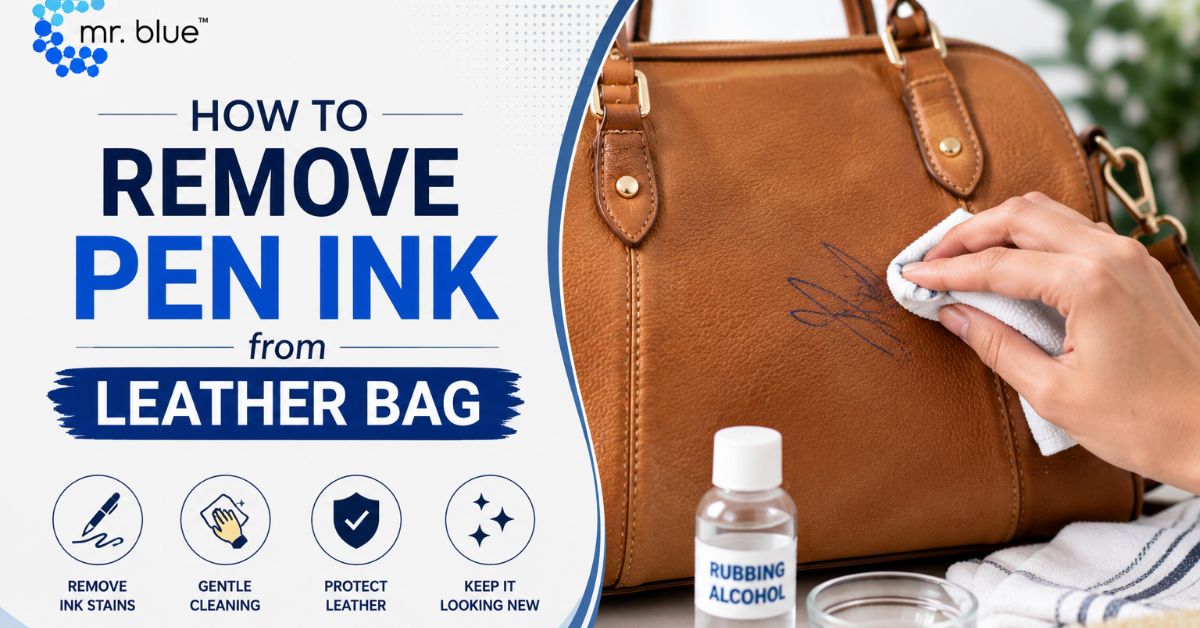
There’s something about finding a pen on your favorite leather bag that just sends panic into your veins. Maybe there’s been a leak inside your work bag, or you left your pen rolling around in your car seat and found it later with a dried blue streak on the leather seat. Leather is not as forgiving as other materials. If you try to clean it wrong, you risk setting the ink deeper into the pores, discoloring the leather surface, or drying out the leather until it becomes stiff and cracked in that area forever.
The best news is that you can treat pen ink on leather in most cases. If you catch it quick enough and take it to the right type of leather with an appropriate method, you can remove the stain completely. In this article, we walk you through how to safely remove pen ink from leather, what not to do, and when it’s actually time to admit defeat and give your bag to a professional.
Why Pen Ink Is Particularly Stubborn on Leather
Leather is a porous material, even if it has been smoothed and finished. Inkjet ink, particularly from gel pens or ballpoint pens, has pigments and chemicals that rapidly soak into leather’s pores. That’s part of the reason an ink stain will often darken if you let it sit. You can’t spray leather with whatever household cleaning spray you have handy like you can a countertop. Leather’s pores are filled with natural oils, and the surface is coated with a finish. Harsh chemicals will eat through these oils and finishes, causing discoloration or spots that are lighter or darker than the rest of the leather even after the ink is removed.
It’s also why solvents that work great to remove ink from fabrics can damage leather if you’re not careful.
Step 1: Identify Your Leather Type Before Doing Anything
Not all leather reacts the same way to cleaning agents, and this is the single most important step people skip. Genuine leather, faux or synthetic leather (often called PU leather), and suede or nubuck each require completely different treatment approaches.
- Genuine smooth leather typically has a protective finish and can tolerate gentle spot cleaning if done carefully
- Faux or PU leather is more sensitive to alcohol and solvents, which can cause the surface coating to peel or crack
- Suede and nubuck are the most delicate, since their napped texture absorbs ink deeply and standard wiping methods can spread the stain further
- Unfinished or aniline leather absorbs stains almost instantly and is the hardest type to treat without professional help
If you’re unsure which type you’re dealing with, testing any cleaning method on a small hidden area like the inside seam or bottom corner, is essential before applying it to the visible stain.
Step 2: Act Quickly, But Don’t Rush the Method
Fresh ink stains are much easier to clean than ones that have had days or weeks to set. However, this does not mean you should immediately reach for the cleaning bottle of choice and start scrubbing away. The first step should always be blotting gently.
Never rub an ink stain as this will drive the ink deeper into the pores of the leather and force the stain to spread out wider. Place a clean dry cloth or cotton swab and blot from the outside edge of the stain towards the center. Do not blot towards the edge of the stain as this will spread the ink further out.
Step 3: Safe Home Remedies for Genuine Leather
For smooth, finished genuine leather, a few gentle methods tend to work reasonably well on fresh to moderately set stains. These aren’t guaranteed fixes, especially for older stains, but they’re worth trying before considering professional treatment.
- Dab a small amount of rubbing alcohol onto a cotton swab and gently blot the stain, testing on a hidden area first, since alcohol can dull certain leather finishes
- Try a small dab of non-gel toothpaste on the stain, gently working it in circular motions with a soft cloth, then wiping clean with a damp cloth
- For fresh stains, a mixture of mild dish soap and water applied with a soft cloth can lift surface ink without over-saturating the leather
- Once treated, always follow up with a leather conditioner to restore moisture, since cleaning agents can dry out the material
Step 4: What to Avoid Completely
Certain products and techniques that work on other stain types can permanently damage leather, and it’s worth being explicit about what not to reach for.
- Avoid using nail polish remover or acetone, as these can strip the leather’s finish and cause permanent discoloration
- Never use bleach or bleach-based wipes, which can weaken leather fibers and cause visible white patches
- Avoid soaking the leather or applying excessive liquid, since leather absorbs moisture and can warp or stiffen once dried
- Don’t use a hairdryer or direct heat to speed up drying, as heat can cause cracking and shrinkage
- Avoid abrasive scrubbing brushes or rough sponges, which can scratch the surface finish permanently
Step 5: Suede and Nubuck Require a Different Approach
It should also be noted that suede/nubuck are best treated differently than other fabrics as their porous/napped surface allows wiping normally to spread the dye farther across the surface of the suede. A suede eraser or suede cleaning brush will typically be safer than a liquid solution. Cleaning in one stroke direction with a brush also helps instead of rubbing back and forth. If the stain is still present afterwards, it may be best to bring it to a suede cleaner.
Step 6: When to Call in Professional Help
Sometimes removing an ink stain isn’t a task for home methods. Professional care is recommended when the stain is more than a couple days old, on suede, nubuck or unfinished leather, is larger than an ink blot, or if you’ve already tried a do-it-yourself solution which may have changed the color or texture of the leather slightly.
You know you want that professional touch to your leather when you deal with a company that has standardized methods and experienced employees. mr.blue Laundry Franchise Business customers turn to for specialty cleaning tasks such as with leather because it provides consistent service. There are a number of variables that can differ between cleaners but when you deal with a franchised cleaning business the method of treating your garments and leather shouldn’t change significantly from store to store. With leather goods such as a pricey handbag this consistency is important. One wrong step can ruin it forever while cloth garments can typically be re-washed to improve results.
There are a number of factors that play into which service provider you should choose including experience, equipment used and how quickly they promise to return your garments. Take the time to see what each provider specializes in before you trust them with your garment. Curious to learn what happens to your leather when it’s cleaned professionally? mr.blue has explained their process for specialty items here.
Preventing Future Ink Stains on Leather Bags
A few simple habits can reduce the chances of dealing with this problem again. Keeping pens in a separate zippered pocket rather than loose in the main compartment prevents accidental leaks or pressure marks from rolling ink cartridges. Choosing pens with a locking cap mechanism reduces the risk of ink leaking when not in use, and periodically checking pen conditions before tossing them into a bag helps catch leaks before they happen.
Final Thoughts
Finding pen ink on your leather bag can feel catastrophic. Leather bags are an investment and pen ink can create a set stain if you aren’t careful. The key is to know what kind of leather you are treating, to take action rather than panic, and to understand your household remedies before applying them to your bag. Spot-treating many kinds of pen ink stains is possible at home without damaging your bag forever.
When in doubt, it’s always best to bring your bag to a professional, especially if the stain is old, set, or on suede. Leather stains don’t always need to be treated immediately, and sometimes your best course of action is to wait. This guide will walk you through everything you need to know to avoid damaging your leather bag.
Frequently Asked Questions
Is rubbing alcohol safe for all leather types?
No, it works reasonably well on smooth genuine leather but can damage faux leather or dull certain finishes, so a hidden-area test is essential first.
What should I never use to remove ink from leather?
Avoid acetone, bleach, excessive water, and direct heat, as all of these can permanently damage the leather's finish and texture.
Is suede ink removal different from smooth leather?
Yes, suede requires a suede eraser or brush rather than liquid-based cleaning, since liquids can spread the stain deeper into the napped texture.
When should I take my leather bag to a professional instead of DIY?
If the stain has set for several days, covers a large area, or is on suede or unfinished leather, professional treatment is generally the safer choice.